Leave a comment

Parsi Stories: Zeher-e-Khoosh

Here is the second story, in a series brought to you via the Parzor Foundation website. This story talks about the discovery of something many of us are now very familiar with, during the reign of King Jamshed… but first, a word of caution: do not try this at home ;)

“The young girl walked purposefully towards this vat. She had decided to poison herself with the foul smelling liquid and end her life. She carefully opened the vat and drank some cupfuls of that rich red liquid. She felt dizzy and thinking she was about to die, she lay down and prayed for a quick release…”

Please click here to read the full story.

2 Comments

Abba Ki Zubaani – A Short Film

2 Comments

13th World Zoroastrian Games Announced

13th Zoroastrian Games, 2012


(via ParsiNews.net) The Zoroastrian Society of Ontario (ZSO) and the Zoroastrian Sports Committee (ZSC) proudly announce openings of registration for 13th Zoroastrian Games (2012), in Toronto, Ontario, Canada.

There’s also an early bird deadline of March 22, 2012 so hurry, because all spots for athletes, housing, and social events will be on a first-come-first-serve basis!

For more information and to register please visit the official games website here:

Leave a comment

An Annotated Bibliography on Zoroastrian Studies

Since time immemorial writers, poets, philophers, artists, and craftspeople among others have documented and passed on from generation to generation facts, truths, legends, even myths – for today and the future to discover, enjoy, and pass on to the future.

In many forms we all gain from the knowledge and learnings of our people, our culture, beliefs, religion, and our history. Unfortunately, for various reasons that include war, conversion, mass migration, and near decimation of our people,  most of the original documentation of Zoroastrian history and culture has been lost in the sands of time – leaving us with perhaps some basic information, and plenty of hearsay.

But over the years, many Parsis, Zoroastrians, and others around us are painstakingly researching, cross referencing and re-documenting Zoroastrian history and all the things that make us who we are. However, these are few and far between, and many aren’t even aware of their existence.

Which brings us to this unique effort by Asha Gupta, who has compiled an annotated bibliography of Zoroastrian studies, and it is available for all of us to see online, with a Foreword by P.N. Jungalwalla, and Introduction by Kapila Vatsayan.


Here’s an excerpt, followed by a link to the actual site and list.

“History tells us that around 4,000 B.C. due to some catastrophe not known to us, the Aryan tribes living in the region north of the Caucasus mountains, forsook their homeland and spread out in different directions. The South-bound hordes headed for the Iranian tableland and settled there and others slowly found their way through the Hindu kush Mountains into India. This split of the tribes appears to be due to Zoroaster’s teachings of just one supreme God Ahura – Mazda, Lord of Life and Wisdom, who controls the universe, in contrast to the many Gods and Goddesses in Hinduism.

Two great national disasters were responsible for the destruction of Zoroastrian texts. The first was the invasions of Iran by Alexander in 323 B.C. when religious texts and Fire Temples were destroyed and learned priests put to death.

The second great national disaster was even worse than the first. This was due to Iran being conquered by the Islamic tribes in the 7th century A.D. Fire temples and religious texts were burnt and learned priests killed. Arabic replaced Persian. It is a miracle that any text survived.

Eventually, around 950 A.D, a small group of Iranian Zoroastrians found asylum in India where they…

click here to visit the site and read more..>>>

Leave a comment

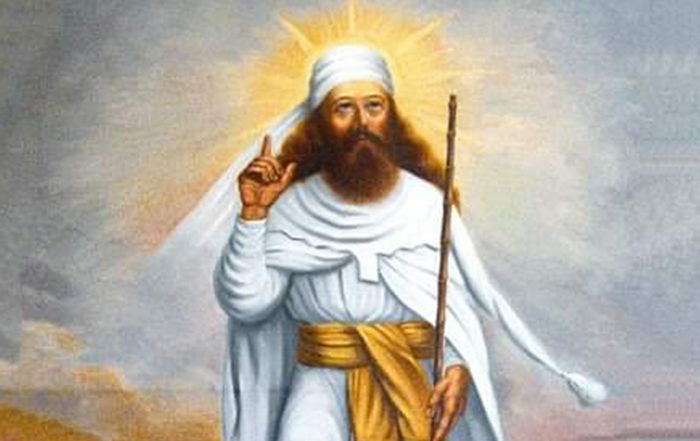
Parsi Stories: The Life of Zarathushtra

Here is the first in a series of Parsi/Zoroastrian stories courtesy the UNESCO Parzor Foundation. Over a period of time we will share all the stories we have here, in the hope they provide insights and draw attention to the history and legends of our religion and community.

Zarathushtra is believed to have lived in the Bronze Age in Central Asia, the ancient land known as Airyana Vaeja. Legend tells us that in a town called Chorasmia, there was a beautiful maiden called Dughdhova. At the age of 15 her body began to shine with a glowing light. Her concerned parents sent her away to Rae or Ragha, near the river Vehdaiti, to the house of their friend Paeteraspa Spitama. The Spitama family belonged to a priestly clan. Pourushaspa, the son of the family soon fell in love with Dughdhova and they were married.

They had five sons. Zarathushtra, the third son, was born on the day Khordad of the month Fravardin, now celebrated as Khordad Saal…

Please click here to visit the Parzor Foundation website and read the full story.

2 Comments

The Gara saree saga

Gara Sari and image courtesy Purveen Meher-Homji and The Heritage Institute

One of the most prized possessions of Parsi families (read women) is their Gara saree or sarees! Not only are they possessions of pride and boy, these beautifully embroidered sarees are often worth more the rest of the entire family wardrobe put together!

Here’s a great article on Garas (as they’re popularly called) from The Heritage Institute.

A gara is a sari traditionally worn on special occasions by the Zoroastrian Parsi and Irani women from India. While some garas may be valued at US$15,000 a piece, they carry with them a priceless heritage which is their worth in these pages.

Surviving garas often become a part of a family’s heirloom – passed down from one generation to the next. At one time, a gara was a regular part of a bride’s trousseau. We hope this tradition can be restored for in doing so it will revive and give new life to a dying craft in the age-old tradition of the village artisans of Yazd and Kerman who produced priceless pieces of silk embroidery including the Kermani pateh-duzi embroidery (see our page on termeh). The craft is well suited to a cottage or home industry… click here to read the entire article

1 Comment

Warming up to Parsi food in winter

Winter is a time for special treats – treats that not only warm our hearts, but literally fight the cold weather as well! One of the all time Parsi winter favorites is Vasanu.

While you can buy Vasanu in places like Mumbai, Pune and cities in Gujarat, in most other places you have to make it at home. Here’s a great recipe for Vasanu via Diana Buhariwala and Zoroastrians.net – click here to read.

Another great favorite is Doodh Pak, which is quite simple to make, but delightful to enjoy on a winter day. Here’s the recipe via Indian Food Forever.

Enjoy :)

Leave a comment

Shortage of Priests, forces Allahabad Parsis to rely on “temporary priests”

In an article published in The Times of India yesterday, the author writes of the challenges faced by our diminishing community in North India:

Even in this crucial juncture, the Atash Behram or the Holy fire at the Fire Temple is kept burning by the efforts of members of this community, just a dozen head counts in the city, who have either placed the wooden log in the fire by themselves or arranged for a ‘Para-Mobed’ (a ‘temporary’ priest who performs holy rituals along with daily routine).

And when there is just one priest in the entire state, that too quite elderly, technological avatar in form of audio cassettes or Parsi people conducting the rituals by their own come to fill the vacuum, especially in the last voyage of life.  


Please click here to read the entire article online

Leave a comment

Parsis Celebrate… via The Asian Age

The Hon'ble Chief Minister of Delhi, Smt Sheila Dikshit releases our Dipanjali

  full story here >

Leave a comment

Our Kaikhushru Pallonji Katrak Dar-e-Meher Golden Jubilee Celebrations

Pictures Courtesy Mr. Navroze Dhondy

Follow

Get every new post delivered to your Inbox.